Urban Analytics Lab

A research group at the National University of Singapore

About us


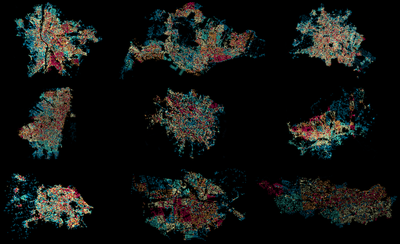
We are introducing innovative methods, datasets, and software to derive new insights in cities and advance data-driven urban planning, digital twins, and geospatial technologies in establishing and managing the smart cities of tomorrow. Converging multidisciplinary approaches inspired by recent advancements in computer science, geomatics and urban data science, and influenced by crowdsourcing and open science, we conceive cutting-edge techniques for urban sensing and analytics at the city-scale. Watch the video above or read more here.

Established and directed by Filip Biljecki, we are proudly based at the Department of Architecture at the College of Design and Engineering of the National University of Singapore, a leading global university centered in the heart of Southeast Asia. We are also affiliated with the Department of Real Estate at the NUS Business School.

People

We are an ensemble of scholars from diverse disciplines and countries, driving forward our shared research goal of making cities smarter and more data-driven. Since 2019, we have been fortunate to collaborate with many talented alumni, whose invaluable contributions have shaped and enriched our research group, and set the scene for future developments. The full list of our members is available here.

Avatar

Filip Biljecki

Assistant Professor

Avatar

Matias Quintana

Research Fellow

Avatar

Koichi Ito

PhD Researcher

Avatar

Zicheng Fan

PhD Researcher

Avatar

Xiucheng Liang

PhD Researcher

Avatar

Sijie Yang

PhD Researcher

Avatar

Kun Zhou

Research Assistant

Avatar

Jesús Balado-Frías

Visiting Scholar

Avatar

Maxim Shamovich

Visiting Scholar

Avatar

Yijie Gao

Graduate Student

Recent publications

Full list of publications is here.
It is not always greener on the other side: Greenery perception across demographics and personalities in multiple cities

Quantifying and assessing urban greenery is consequential for planning and development, reflecting the everlasting importance of green spaces for multiple climate and well-being dimensions of cities. Evaluation can be broadly grouped into objective (e.g., measuring the amount of greenery) and subjective (e.g., polling the perception of people) approaches, which may differ – what people see and feel about how green a place is might not match the measurements of the actual amount of vegetation. In this work, we advance the state of the art by measuring such differences and explaining them through human, geographic, and spatial dimensions. The experiments rely on contextual information extracted from street view imagery and a comprehensive urban visual perception survey collected from 1000 people across five countries with their extensive demographic and personality information. We analyze the discrepancies between objective measures (e.g., Green View Index (GVI)) and subjective scores (e.g., pairwise ratings), examining whether they can be explained by a variety of human and visual factors such as age group and spatial variation of greenery in the scene. The findings reveal that such discrepancies are comparable around the world and that demographics and personality do not play a significant role in perception. Further, while perceived and measured greenery correlate consistently across geographies (both where people and where imagery are from), where people live plays a significant role in explaining perceptual differences, with these two, as the top among seven, features that influences perceived greenery the most. This location influence suggests that cultural, environmental, and experiential factors substantially shape how individuals observe greenery in cities. We also found that the spatial arrangement of greenery in the sight, rather than its proximity to the person, influences perception. Our study provides a new understanding of the deep relationships between objective and subjective street-level greenery assessments, contributing to a more human-centric design of green urban environments.

Heterogeneous graph neural networks for building attribute prediction from hierarchical urban features and cross-view imagery

Data on building properties are essential for a variety of urban applications, yet such information remains scarce in many parts of the world. Recent efforts have leveraged instruments such as machine learning (ML), computer vision (CV), and graph neural networks (GNNs) to assess these properties at scale by leveraging urban features or visual information. However, extracting holistic representations to infer building attributes from multi-modal data across multiple spatial scales and vertical building characteristics remains a significant challenge. To bridge this gap, we present a innovative framework, that captures both hierarchical urban features and cross-view visual information through a heterogeneous graph. First, we construct a heterogeneous graph that incorporates multi-dimensional urban elements — buildings, streets, intersections, and urban plots — to comprehensively represent multi-scale geospatial features. Second, we automatically crop images of individual buildings from both very high-resolution satellite and street-level imagery, and introduce feature propagation on semantic similarity graphs to supplement missing facade information. Third, feature fusion is applied to integrate both morphological and visual features, with holistic representations generated for building attribute prediction. Systematic experiments across three global cities demonstrate that our method outperforms existing CV, ML, and homogeneous GNN-based models, achieving classification accuracies of 86% to 96% across 10 to 12 distinct building types, with mean F1 scores ranging from 0.70 to 0.73. The framework demonstrates robustness to class imbalance and produces more distinctive embeddings for ambiguous categories. In additional task of inferring building age, the method delivers similarly strong performance. This framework advances scalable approaches for filling gaps in building attribute data and offers new insights into modeling holistic urban environments. Our dataset and code are available openly at: https://github.com/seshing/HeteroGNN-building-attribute-prediction.

Visual determinants of outdoor thermal comfort: integrating explainable AI and perceptual assessments

Outdoor thermal comfort is a crucial determinant of urban space quality. While research has developed various heat indices, such as the Universal Thermal Climate Index (UTCI) and the Physiological Equivalent Temperature (PET), these metrics fail to fully capture perceived thermal comfort. Beyond environmental and physiological factors, recent research suggests that visual elements significantly drive outdoor thermal perception. This study integrates computer vision, explainable machine learning, and perceptual assessments to investigate how visual elements in streetscapes affect thermal perception. To provide a comprehensive representation of diverse visual elements, we employed multiple computer vision models (viz. Segment Anything Model, ResNet-50, and Vision Transformer) and applied the Maximum Clique method to systematically select 50 representative ground-level images, each paired with a corresponding thermal image captured simultaneously. An outdoor, web-based survey among 317 students collected thermal sensation votes (TSV), thermal comfort votes (TCV), and element preference data, yielding 2,854 valid responses. The same survey was replicated in an indoor exhibition setting to provide a comparative reference against the outdoor experiment. A Random Forest classifier achieved 70% and 68% accuracy in predicting thermal sensation and comfort, respectively. Using Shapley Additive Explanations to interpret model outcomes, we uncovered that the colour magenta emerged as the most influential visual factor for thermal perception, while greenery – despite being participants most preferred element for cooling – showed weaker correlation with actual thermal perception. These findings challenge conventional assumptions about visual thermal comfort and offer a novel framework for image-based thermal perception research, with important implications for climate-responsive urban design.

Contact